Stiles & gates
Gates I have leaned on
A small end-of-year collection of field gates, gateposts and gateways, and what the stone either side of a gate can tell you.
It is December, it is dark by four, and I have spent more time this month looking through old notebooks than walking. So this is a lighter post: a handful of gates I remember, and a few things I have learned about gateways along the way.
The gate is the weak point of every wall. It is where the wall stops being a wall, where animals and people and machinery pass, where mud collects and stone gets knocked. It is also, I think, where people spend most of their time standing still in the countryside. You arrive at a gate, open it, go through, close it, and very often you lean on it for a minute first.
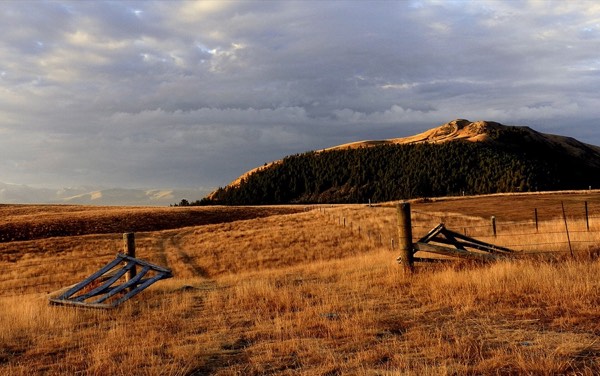
The gate with the stone hinge
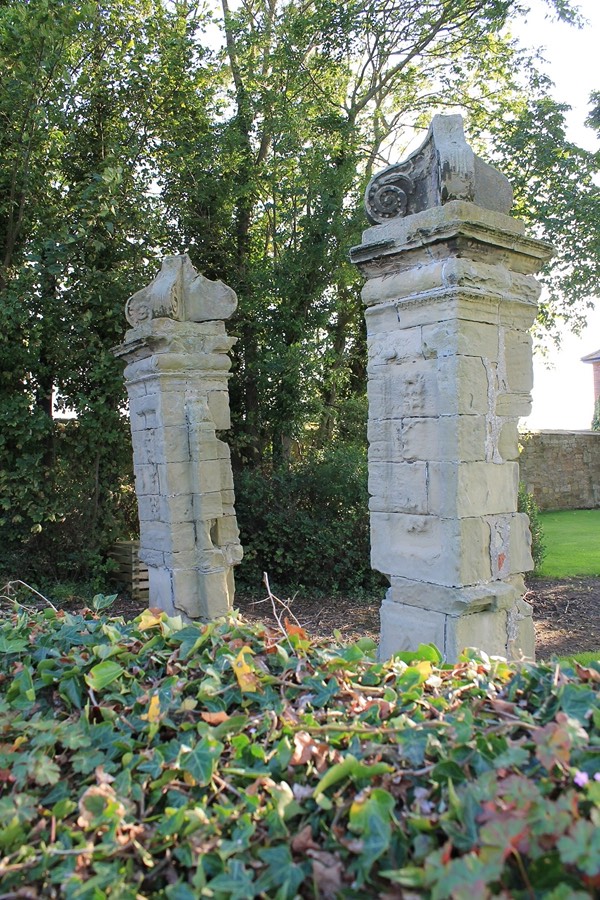
On a farm track above the town there is an old gateway where the gate is long gone and only the posts remain. One post has two iron pins leaded into holes in the stone, for the hinges. The other has a slot cut into its face where a latch would have caught. Neither has been used for years; the gap is closed by a length of wire and a sheep hurdle. What I like about it is that you can tell, from the stone, which way the gate used to swing and roughly how tall it was. The gate is a ghost but the posts remember it.
The post with the holes
Older than hinged gates, in many places, were gateways closed with loose wooden rails. The gateposts have a column of square or round holes cut into them, on the inner face, and the rails were slid into the holes on one side and dropped into slots on the other. To open the gate, you pulled the rails out one by one and stacked them. I have seen posts with five or six holes in a neat column, worn smooth inside. Some have been reused in later walls or as lintels, so you sometimes see a stone with a row of holes in it sitting sideways in the middle of a wall, which is the stone equivalent of finding an old ticket in a coat pocket.
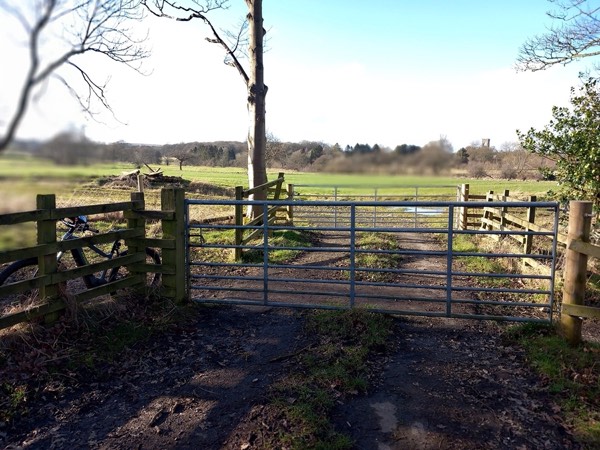
The five-bar gate at the top of the lane
The classic field gate in England is a wooden gate with five horizontal bars and a diagonal brace, and there is one at the top of my usual lane, silver-grey with age and covered with a fine grey-green lichen, mostly on its top rail where the rain sits. It has been mended so many times that I doubt any of the original timber is left, and it hangs a little low, so it drags on the ground and has worn a quarter circle in the mud. I lean on it most weeks. It is the best view on the walk: a long wall running down into the valley and the reservoir beyond.
A metal gate in a stone wall
Most gates in use today are galvanised steel, hung on posts that are often wooden or concrete, and they are perfectly sensible. But you can learn a lot from where a modern gate has been put into an old wall. Sometimes the old stone gateposts are still there with a new metal gate hung between them on bolted brackets. Sometimes the old gateway has been walled up, in different stone, and a new wider gap made a few metres along to take a tractor. I have seen walls with two or three walled-up gateways in a single field side, each one a little narrower than the one that replaced it. Farm machinery has grown, and the gaps have followed.
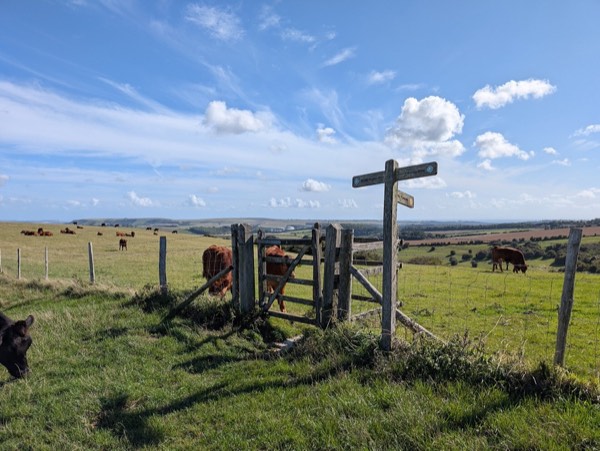
Kissing gates
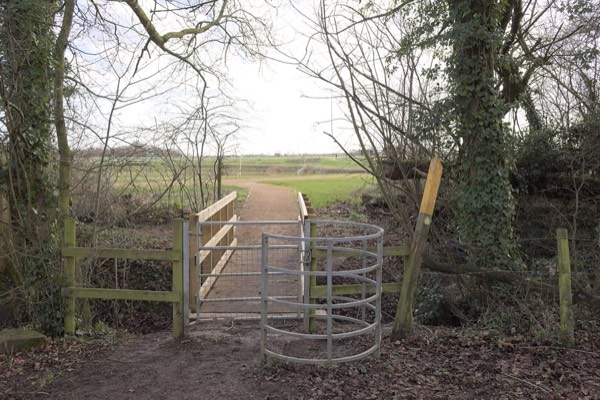
A kissing gate is a small gate swinging inside a U-shaped or V-shaped enclosure, so that it touches one side or the other but never leaves a clear way through. People pass; livestock do not. The name, I am told, comes from the gate kissing each side of the enclosure as it swings. There is also a well-worn suggestion that the person going through second should demand a kiss before letting the first person out, which I offer here without recommending it.
A small appeal for gates
Close them. It is the oldest rule of walking in farmland and the one that still matters most. A gate left open on the wrong day can mean a flock mixed with the neighbour’s, a ewe on the road, or a long afternoon for someone who was not expecting it.
That is the last post of the year. Thank you to the handful of people at the natural history group who told me at the November meeting that they had been reading this. I did not expect anyone to. I will be back in January, probably with walls from further afield.