Glossary
The words I had to learn to talk about walls and the things that grow on them. Local names vary from valley to valley; these are the ones I hear most.
- Areole
- One of the small islands that make up a crust lichen such as the map lichen, separated from its neighbours by fine cracks or a dark fungal border.
- Batter
- The inward lean of each face of a wall as it rises, so that the wall is wider at the bottom than at the top. Usually set with a wooden frame and lines rather than judged by eye.
- Bee bole
- A recess built into a wall, usually a garden wall near a house and often facing south, to shelter a straw bee skep.
- Bield
- A short freestanding wall, often curved or built as a cross, that gives sheep shelter from wind and snow whichever way it blows.
- Bryophyte
- The group name for mosses, liverworts and hornworts: small plants without true roots or internal water pipes.
- Capsule
- The spore case of a moss, carried on a stalk (the seta). Its shape, angle and lid are often the best clues to the species.
- Clearance cairn
- A heap of stones gathered off a field to make it workable. Some are prehistoric, some are from the last time someone ploughed.
- Copes
- The row of stones set on edge along the top of a wall, packed tightly to weigh down the courses below and shed rain. Also called cope stones, coping or toppers.
- Course
- One layer of stones along the face of a wall.
- Cover band
- A row of flat stones laid across the top of the wall beneath the copes, found in some regional styles.
- Creep
- A rectangular opening at the base of a wall, with a lintel over it, that lets sheep pass between fields when it is open. Also hogg hole, lunky hole or cripple hole, depending on where you are.
- Crottle
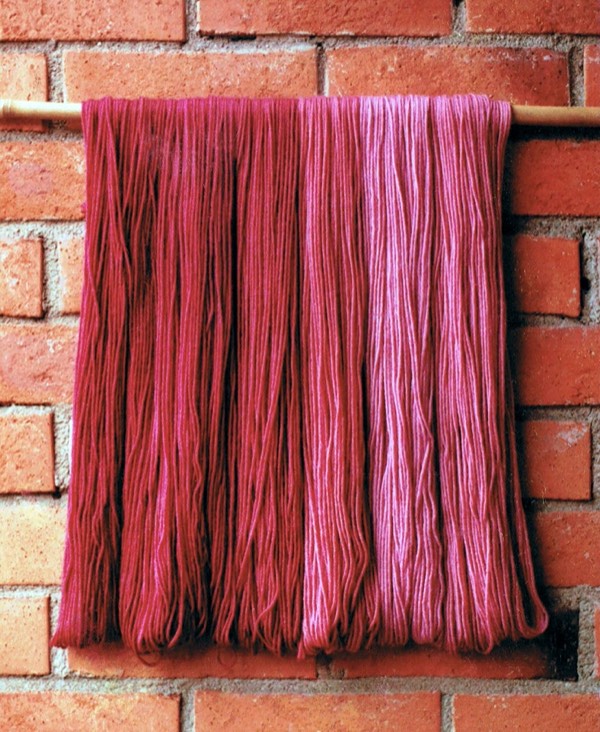
- An old name for lichens scraped from rocks to make brown wool dyes in Scotland and Ireland, especially Parmelia saxatilis and its relatives.
- Crust lichen
- A lichen that grows as a thin layer so tightly attached to the stone that it cannot be removed without the stone's surface. Also called crustose.
- Enclosure wall
- A wall built to divide former common land under a legal award, mostly in the late eighteenth and early nineteenth centuries. Typically straight, regular, and indifferent to the shape of the ground.
- Face
- Each of the two outer sides of a double dry stone wall, built in courses and leaning inward.
- Fell wall
- See intake wall.
- Footings
- The large foundation stones at the base of a wall, set below or at ground level on firm ground. Often all that remains of a fallen wall.
- Foliose lichen
- A leafy lichen, made of flattened lobes that lift at the edges, such as the common orange lichen.
- Frame
- A wooden A-shaped template set at each end of a section being built, giving the profile and batter of the wall. Lines are stretched between frames to guide each course.
- Gap
- A fallen section of wall, or the act of rebuilding one ("gapping"). Also used for a deliberate opening.
- Hair point
- The colourless tip on the leaves of some wall mosses, which gives a dry cushion its silvery look.
- Hearting
- The small, angular stones packed by hand between the two faces of a wall. Invisible once the wall is finished and essential to it standing.
- Inbye
- The enclosed, improved land close to a farm, below the intake wall.
- Intake wall
- The wall that marks the upper limit of farmed land, separating the inbye fields from the open fell or moor.
- Lichenometry
- Estimating how long a rock surface has been exposed by measuring the largest lichens growing on it, using growth rates worked out for a particular region.
- Lines
- Strings stretched between the frames to mark where each face should run as a course is laid.
- Nitrophilous
- Nitrogen-loving. Used of lichens, such as the common orange lichen, that thrive where droppings, dung or fertiliser add nitrogen.
- Pinfold
- A small walled pound, usually in or near a village, where stray animals were held until their owners paid to collect them.
- Prothallus
- The fungal layer, without algae, that spreads at the edge of some crust lichens and shows as a black border on the map lichen.
- Rhizome
- The creeping underground or surface stem of a fern such as polypody, from which the fronds rise.
- Running joint
- A vertical joint that runs up through two or more courses, breaking the rule of one stone over two. A weak line, and often where a gap begins.
- Sheepfold
- A walled enclosure, often against an intake wall or near a stream, used to gather sheep for counting, shearing or sorting.
- Smoot
- A small opening at the base of a wall, either to let water through or, in some areas, for hares and rabbits.
- Sorus
- One of the clusters of spore cases on the underside of a fern frond. On polypody they are round and orange-yellow in late summer.
- Squeeze stile
- A narrow gap between two upright stones, wide enough for a person and too narrow for a sheep. Also gap stile.
- Step stile
- Long stones built through a wall so that they stick out on both sides as steps.
- Throughstone
- A long stone laid right across the wall from face to face, tying the two halves together. Often visible as a row of protruding ends along a field side.
- Trace walling
- Laying stones with their length along the face rather than into the wall. Neat to look at and weak in use.
Missing a word, or using one differently where you walk? Regional walling vocabulary is wonderfully inconsistent, and I am still collecting it.