Walls & walling
Walls elsewhere
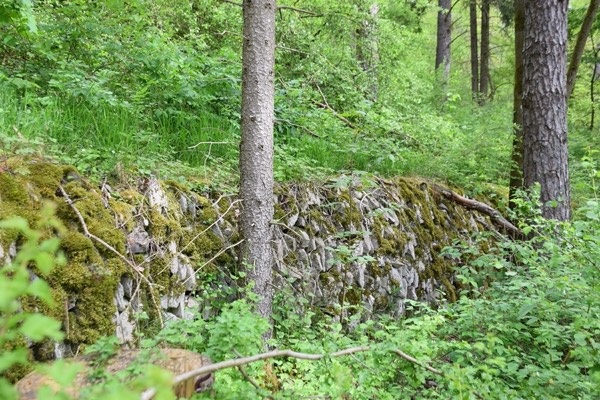
Dry stone walls are not a northern English speciality. Notes on walls from karst plateaus, mountain terraces and the far west of Ireland, from travels and from reading.
It is easy, living among them, to think of dry stone walls as a local thing, as much a part of the north as rain and sheep. They are not. People have built walls without mortar wherever there was stone in the way and animals or soil to keep in place, and the techniques are recognisably the same across very different landscapes. In 2018 the art of dry stone walling was added to UNESCO’s list of intangible cultural heritage, as a joint nomination from a group of European countries including Croatia, Cyprus, France, Greece, Italy, Slovenia, Spain and Switzerland.
This post is a winter one, made up partly of my own trips and partly of reading by the fire. It is a reminder that the walls on my doorstep are one dialect of a very widespread language.
The karst
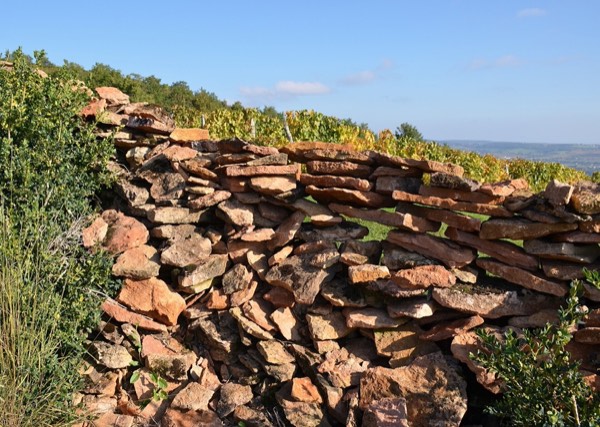
A few years ago I spent a week on the limestone plateau that runs along the border between Slovenia and Italy, known as the Karst. The ground there is all bare white rock, thin red soil and scrub, and the fields are small enclosures cleared of stone, with the cleared stone piled up into walls around them. Some of the walls are enormously thick, much more than is needed to keep anything in, because their real purpose was to get the stone off the land. Some fields have walls that are wider than the paths between them.
The local word for a dry stone wall in Slovenian is suhi zid, literally “dry wall”. The walls are paler than ours, almost white, and the lichens on them are different: more orange and yellow crusts, fewer of the grey-green ones, and in summer lizards on every sunny stone. I did not see a single moss cushion on a wall in the whole week, which says a lot about the summer climate.
Terraces in the mountains
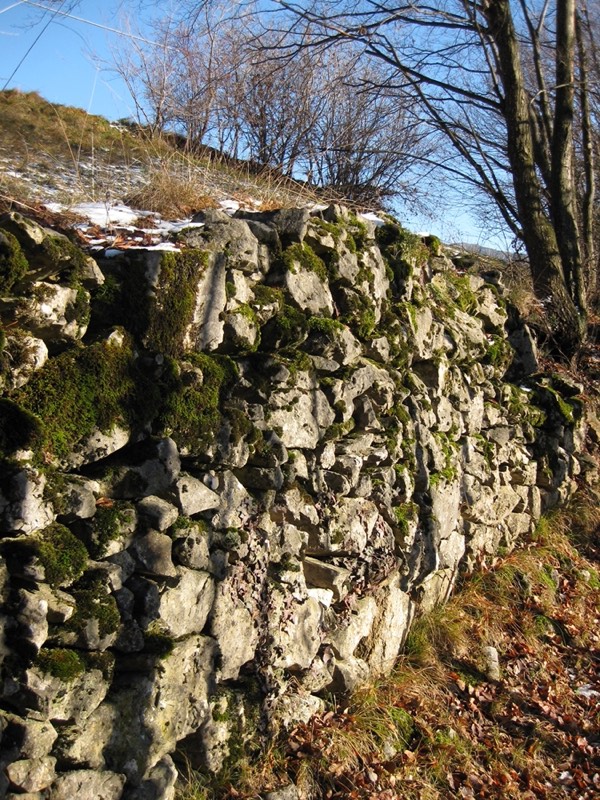
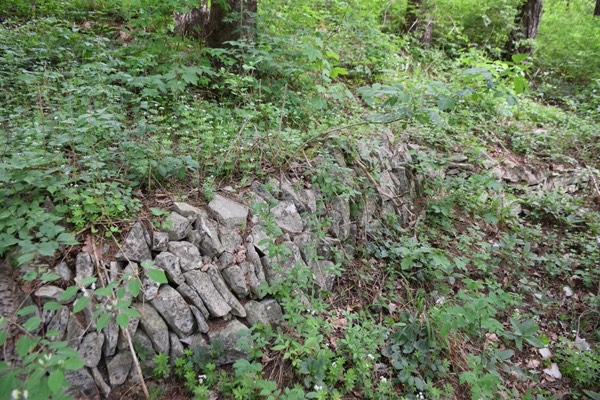
Further north, in the Alps, the dry stone walls that matter most are terraces rather than field boundaries. On steep slopes, walls were built to hold back level strips of soil, for vines in the warmer valleys and for hay and potatoes higher up. A terrace wall has only one face; the other side is earth. It is a retaining wall, and it has to take the push of the whole slope behind it, especially when the soil is wet.
I have only walked past these, never studied them, but I was struck by how many were being actively repaired by volunteers in the villages I passed through. Walls fall wherever they are, and people mend them wherever they care.
The far west
The walls I most want to see again are on the limestone islands and coast of the west of Ireland. On some of the islands, walls divide the land into tiny fields, sometimes not much bigger than a room, and the total length of wall is said to be enormous for the area. Many are single walls: one stone thick, built with gaps between the stones so you can see daylight through them. They look as if they should blow over. They do not, partly because the wind goes through rather than against them, which may be exactly why they were built that way.
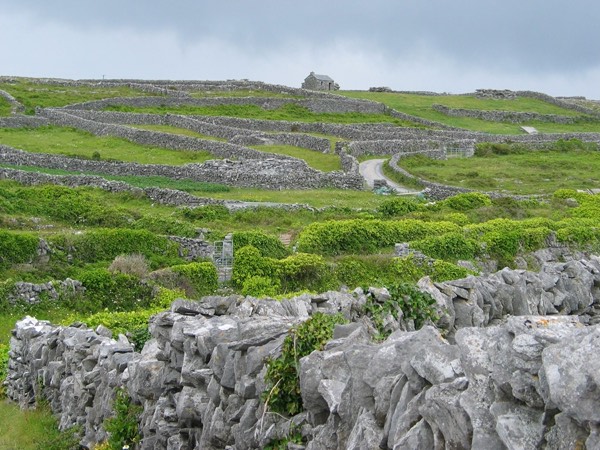
On the limestone pavement of the Burren nearby, the walls run across a landscape of grey slabs and cracks full of ferns and flowers. Hart’s-tongue and maidenhair spleenwort grow in the grikes, the cracks in the limestone, in the same way they grow in the joints of a wall. The pavement is a natural wall laid flat.
Galloway and Cornwall
Closer to home there are two other traditions I keep reading about. In Galloway, in south-west Scotland, there are dykes built with a lower part of ordinary double wall and an upper part of single stones with gaps between them, or built entirely as single, see-through stonework. The story is that sheep are nervous of a wall they can see light through and will not try to jump it. Whether that is true or a good story, I do not know.
In Cornwall, the field boundaries called hedges are not hedges in the usual sense at all but earth banks faced with stone on both sides, often with plants growing on top. They are closer to a stone-faced bank than a wall, and they are full of plants, navelwort especially, which loves the earth-backed joints.
What is the same everywhere
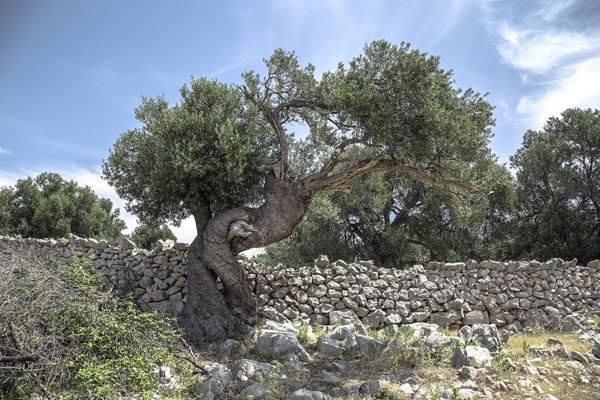
The details change: the stone, the height, the style of the top, the local words. What stays the same is the logic. Clear the stone off the land, put it where it is useful, lay each stone across the joints below, keep the weight leaning inward. Walls in very different places look like cousins because they are solving the same problem with the same material and the same hands.