Lichens
What the orange says
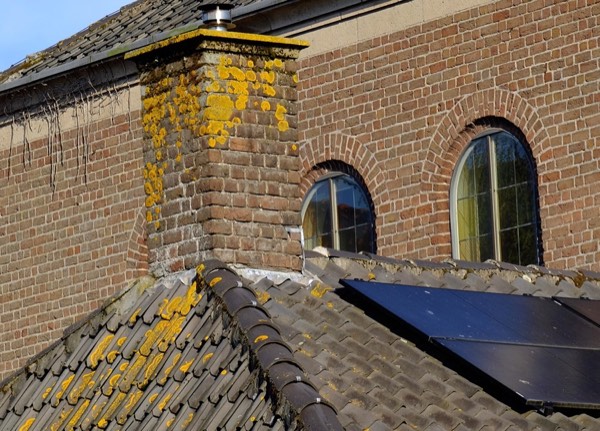
The bright orange lichen on wall tops and barn roofs is beautiful, and it is also a sign of what is in the air and on the land.
If you only notice one lichen on a wall, it will be the orange one. Bright yellow-orange, leafy, crinkled at the edges, often in patches the size of a saucer, on the copes, on gateposts, on barn roofs, on the concrete tops of old troughs. It is usually Xanthoria parietina, the common orange lichen, and once I had learned a bit about it I started to read it as a kind of map of where nitrogen falls.
What it looks like
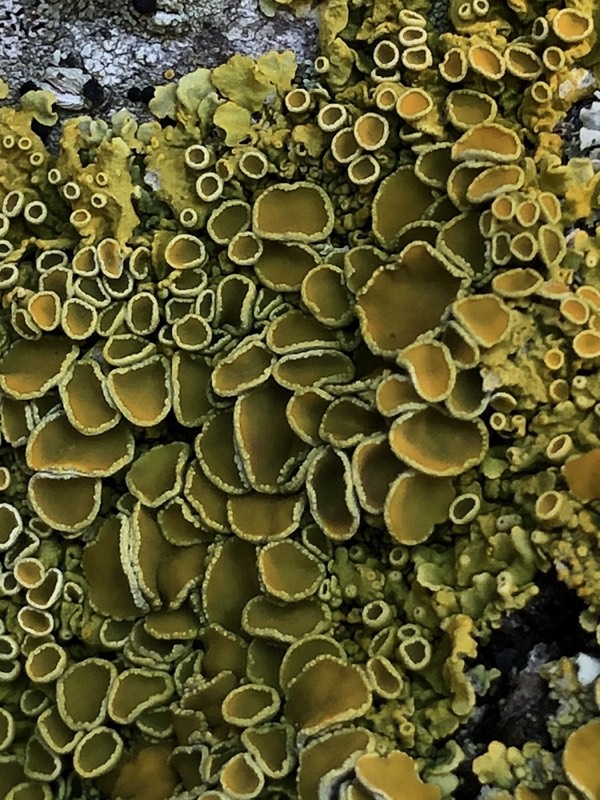
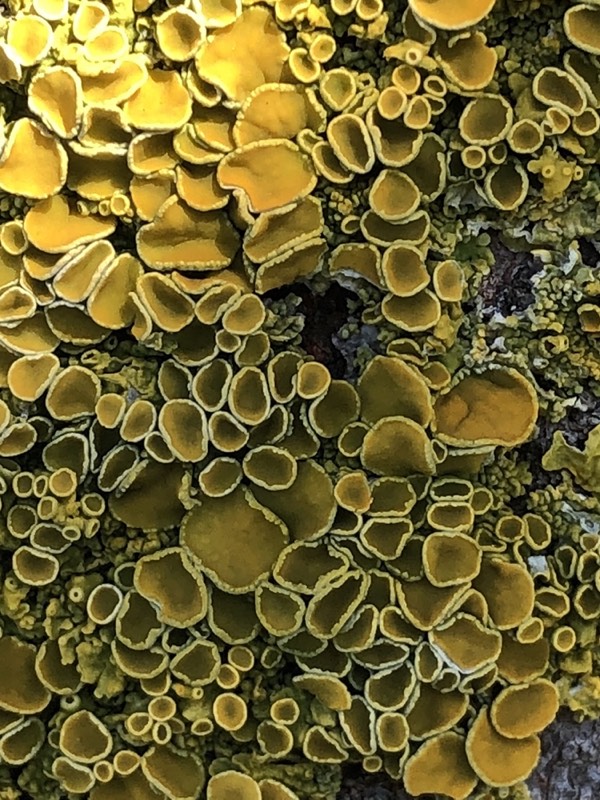
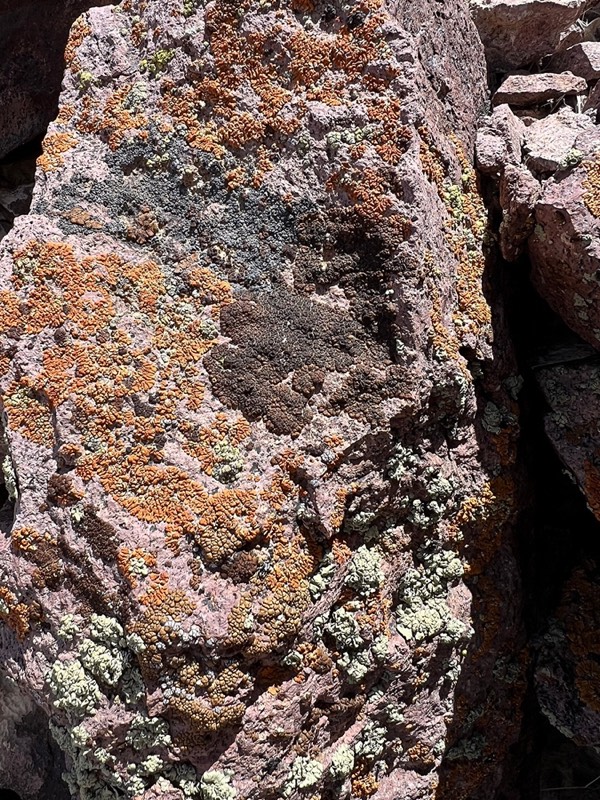
Xanthoria parietina is a foliose lichen, which means leafy rather than crusty: it forms a rosette of small, flattened lobes, lifted slightly at the tips, with the colour strongest where it is most exposed to sun. In shade it can be greenish-grey. In the middle of an older rosette there are usually lots of small, deeper-orange cups, the fruiting bodies, which make it look as if it has been sprinkled with tiny orange buttons.
There are several other orange lichens on walls that are crustier and harder to tell apart, many of which used to be lumped together under one genus and have since been split into several. I do not try to name those. “Orange crust” goes in the notebook.
Where it grows
On my walls the pattern is very clear. Xanthoria is thickest on the tops of copes, especially at points where birds perch: the end of a wall by a gate, a taller cope that makes a good lookout, the corner where two walls meet. It is heavy on barn roofs, especially below gaps in the eaves where birds go in and out. It is all over the stone troughs where cattle drink. And it is much more abundant on walls next to improved, fertilised fields than on walls high up on the open fell.
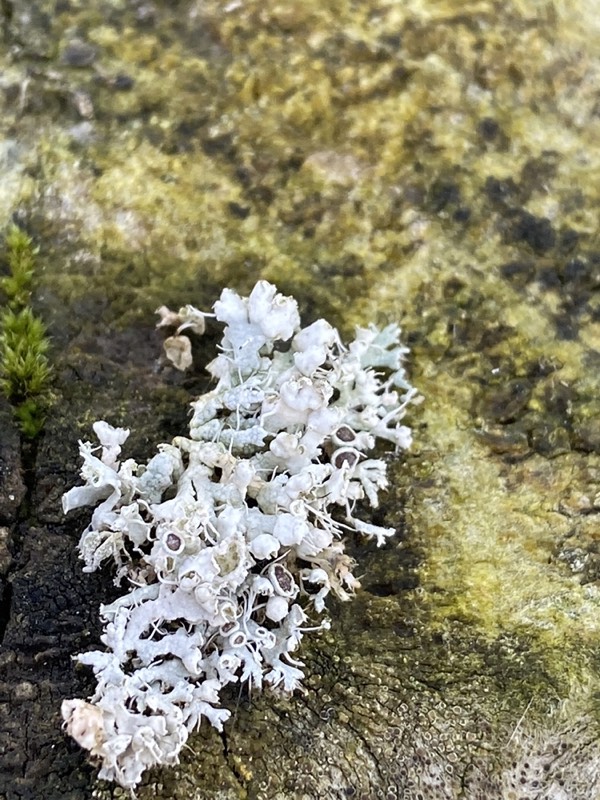
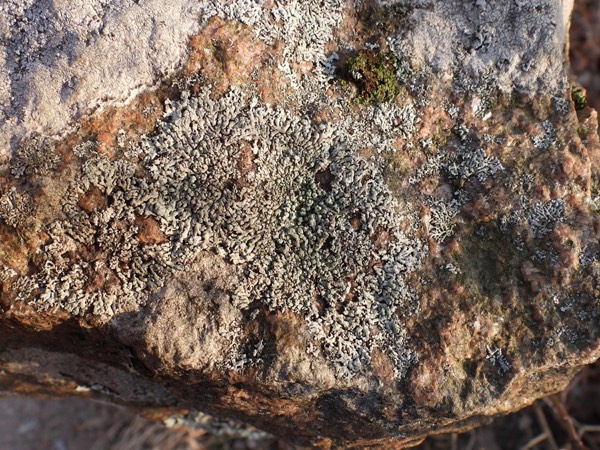
What these places have in common is nitrogen. Bird droppings, animal dung and fertiliser drift all add nitrogen compounds, and Xanthoria thrives on them. Lichenologists describe it as nitrophilous, nitrogen-loving, and it is one of a group of lichens that tend to increase where ammonia and other nitrogen pollution are high. Grey Physcia rosettes are often part of the same group, and you will often see the two growing together.
Lichens as air monitors
Lichens have been used to judge air quality for a long time. They take in almost everything from the air and rain, and they cannot shed it. Through much of the twentieth century, in industrial areas, the big problem was sulphur dioxide from coal burning, and many lichens simply disappeared from towns and the countryside downwind of them. As sulphur pollution fell, many lichens came back, sometimes surprisingly quickly.
The concern now is different. The nitrogen-loving lichens, including the orange one, are increasing, while some of the more sensitive species, especially the shaggy and beard-like lichens that grow on trees, decline where nitrogen is high. There are simple survey methods, aimed at schools and volunteers, where you count the nitrogen-loving and nitrogen-sensitive lichens on twigs and tree trunks to get an idea of local air quality. They work best on trees rather than walls, but the principle is the same one I see on the copes.
A small survey of my own
On a sunny afternoon this month I walked the intake wall from the village to the fell gate again, the one I wrote about last May, and roughly scored each fifty-metre stretch for how much orange lichen there was on the copes: none, a little, or a lot. It is not science. But the pattern was obvious. The lowest stretches, next to fertilised meadows and near the farm, scored “a lot” almost all the way. The higher stretches, alongside rough grazing, scored “a little” or “none”, with orange only at the obvious bird perches. Right at the top, where the wall meets the open moor, the copes were grey and green with map lichen and crusts, and I found orange only on one stone, which had an owl pellet on it.
Beautiful anyway
None of this makes the orange lichen less lovely. A barn roof with stone slates covered in Xanthoria, in late afternoon light, is one of the best colours in the countryside. I just look at it now with a second thought attached: this is a place where something is being added to the land, and the lichen is quietly keeping count.