Walks
A small field kit for wall-watching
What I carry on a walk along walls, after two years of trial and error, and the few things that turned out to matter.
A couple of people have asked, at the natural history group, what I take with me on these walks. The honest answer is: less than I used to. In the first year I carried two field guides, a camera, a tape measure, specimen bags, a magnifying glass, a hand lens, binoculars, two notebooks and a flask, and spent most of each walk rummaging. This is the slimmed-down version, as of this autumn.
The hand lens
The one thing I would not go without. A small folding lens, ten times magnification, on a cord round my neck. The trick, which nobody told me for months, is to hold the lens close to your eye, almost touching your glasses or your eyebrow, and then bring the moss or lichen towards it, or move your head towards the stone, until it comes into focus. If you hold the lens at arm’s length like a magnifying glass, you see almost nothing.
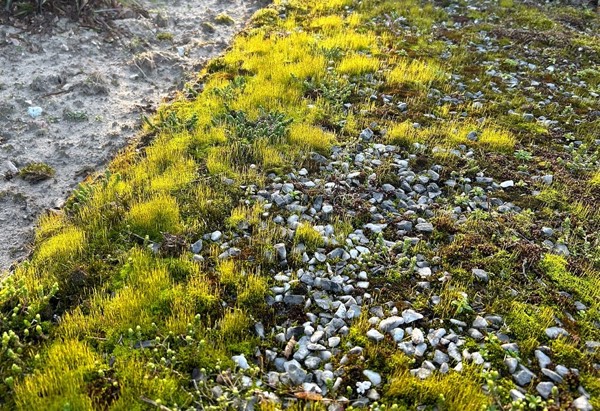
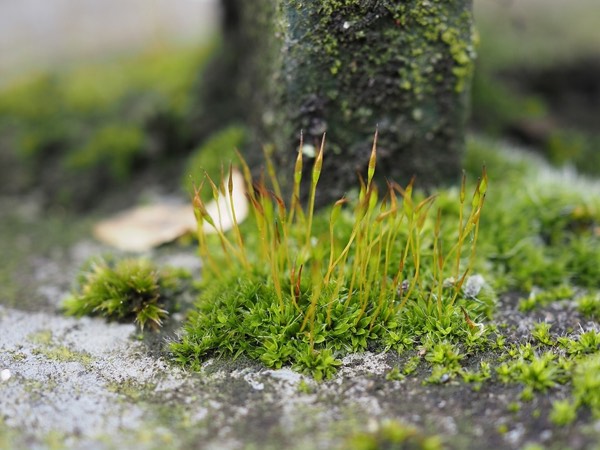
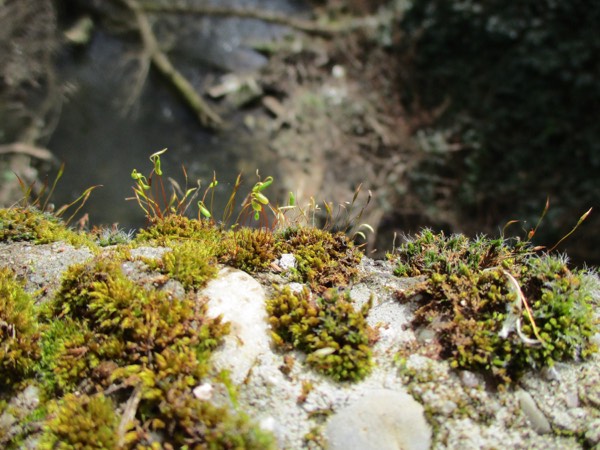
With a lens, a grey crust on a cope becomes a landscape: cups, cracks, tiny black dots, hair points on moss leaves, the twisted teeth of a capsule. Without one, you are guessing. It is the cheapest thing in the kit and has changed what I see more than anything else.
A water bottle
For drinking, but also for wetting dry moss to see its proper shape and colour. A few drops on a curled, dry tuft and you can watch it open out under the lens. A small spray bottle, like the ones for misting houseplants, works even better and uses less water.
The notebook
A pocket notebook with stiff covers and waterproof-ish paper, and a pencil, not a pen, because pens stop working in the rain and pencils do not. I write the date, the place, the weather, and then whatever I see, with small sketches. I have tried taking notes on my phone and it is not the same; I look at the screen instead of the wall. The sketches are terrible, but drawing something makes you look at it far more carefully than photographing it.
One field guide
Just one, and it changes with the season. In winter and spring, a guide to mosses and liverworts. In summer, one for ferns and wall plants. Lichens are hard, and the best lichen guides are big, so for those I take photographs of anything I cannot place and look them up at home.
Gloves and knee mat
A pair of tough gloves, in case I end up moving a stone or two on a gap (only ever with permission). And a small foam kneeling mat, the kind sold for gardening, because a great deal of wall-watching happens at the level of the footings, and the verge is nearly always wet.
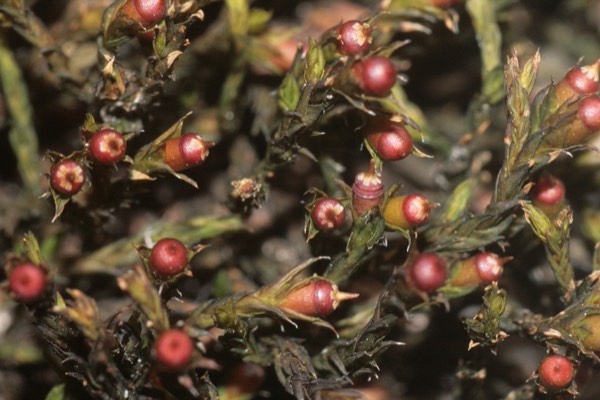
A small camera, or just the phone
For a while I carried a separate camera with a close-up lens. I have given up. The phone takes good enough pictures for a record, especially with a clip-on macro lens, and the photographs are for my notes, not for anyone else. I still cannot take a decent photograph of a moss, but I can take one good enough to identify later, which is all I need.
Things I have stopped carrying
- Specimen bags. I do not collect anything now. Mosses and lichens on walls grow so slowly that I would rather leave them where they are and go back to look again.
- A second notebook for “tidy” notes. It never got written up.
- The tape measure, except when I am deliberately measuring lichen colonies for my own slow experiment on the rebuilt section from last year. It goes in a pocket for those trips only.
- Binoculars. Lovely, but they are for birds, and on a wall walk I am mostly looking down.
And the most important thing
Time. A kit is no use if you are walking at four miles an hour. The best wall walks I have had were the ones where I gave myself far too long for the distance, and then still ran out of daylight before I ran out of things to look at.